How to Choose the Right PR Agency for Your Travel, Adventure, and Wellness Brand
I started Roam Generation while living on a boat, sailing the world. Somewhere between anchoring in places I couldn't have found on a map a year earlier and meeting the people behind extraordinary things along the way, adventure outfitters, wellness retreats, small hospitality brands with more heart than budget, I felt an overwhelming pull to tell their stories. Travel had changed me. It changed how I saw the world, how I made decisions, how I understood other people. I wanted more people to feel that too. That's the reason Roam Generation exists: not to generate headlines, but to help travel, adventure, and wellness brands share stories that are genuinely capable of changing how people see the world. To us, travel isn't just an industry, it's a way of life, and we don't just represent that world, we live in it. That's not a tagline, it's the lens everything below comes from.
Which is exactly why I care so much about how founders choose their PR agency. The right agency can help you build credibility, strengthen media relationships, increase search visibility, and position your business as an authority in your category. The wrong one generates activity without creating meaningful business outcomes, and worse, it can bury a story that deserved to be told properly.
With hundreds of agencies promising media coverage, it's hard to know what actually matters. Here's what I look for, and what I think every founder should ask, before choosing a PR partner.
How do you choose the right PR agency for a travel, adventure, and wellness brand?
In my experience, the best PR agency understands the travel industry, develops strategy before pitching journalists, has strong media relationships, measures success beyond press coverage, and acts as a long-term strategic partner. I'd also look for senior involvement, international market expertise, and a clear approach to building authority rather than simply generating publicity.
Every business has different goals, but there are several questions I think every founder should ask before choosing a PR partner.
8 Questions to Ask Before Hiring a Travel PR Agency
1. Does the agency specialise in travel, adventure, and wellness brands?
Public relations is highly industry specific. Travel journalists, editorial calendars, seasonal trends, destination marketing, and consumer travel behaviour all influence whether a story gains traction. An agency with genuine travel experience understands what editors are looking for, which stories resonate in different publications, and how to position destinations, hotels, experiences, and tourism brands effectively.
I always tell founders: choosing an agency that already understands your industry means less time explaining your business and more time creating opportunities.
2. Does the agency build strategy before pitching journalists?
Strong PR begins long before the first media pitch. An experienced agency should invest time understanding your commercial goals, target audience, positioning, competitors, and long-term business objectives before recommending media activity. Coverage without strategy often creates short-term publicity. Strategy creates long-term authority.
I saw this play out with one of our clients, an adventure brand based in the Norwegian fjords. It took over a year of building relationships with the right editors, one feature at a time, before they landed a spot on a major global list of the world's greatest places. That recognition wasn't a lucky break, it was the result of a strategy built long before the big win arrived. The strongest agencies don't ask "where can we pitch this?" They ask "what story should your brand become known for?"
3. Will senior people actually manage your account?
One of the most overlooked questions is also one of the most important. Many agencies sell their expertise through senior leadership before handing day-to-day management to junior staff. There's nothing wrong with developing junior talent, but founders should understand who will actually develop strategy, build media relationships, and make key decisions.
Strategic thinking is difficult to delegate. In my experience, senior involvement leads to stronger positioning, better judgement, and more meaningful media opportunities, especially in a category as nuanced as travel and luxury.
4. Can they demonstrate measurable results?
Every agency can show you media logos. Fewer can explain how their work contributes to business growth. Ask how they measure success, and look beyond the number of articles published. Consider whether they measure:
Brand authority
High-quality media coverage
Referral traffic
Backlinks
Search visibility
Share of voice
Qualified enquiries
Long-term reputation
The strongest agencies connect PR activity to commercial outcomes rather than simply counting press mentions.
5. Do they understand international media markets?
If your ambitions extend beyond one country, your PR strategy should too. A story that resonates in Australia may need a different angle in the United Kingdom. The same experience may be positioned very differently for American media. Successful global PR isn't about translating the same press release, it's about adapting stories to different audiences while maintaining a consistent brand position. This becomes increasingly important for travel brands looking to build international recognition.
6. Are they building authority instead of chasing publicity?
Media coverage should never be the goal, authority should. The strongest PR agencies think beyond individual articles. They focus on creating a reputation that journalists recognise, audiences trust, and search engines understand.
One of our clients, a luxury sailing hospitality brand in the Mediterranean, spent a year building relationships with editors and culinary partners before becoming the name journalists now call first whenever they're covering elevated yacht travel. That's what authority looks like in practice, and today, it influences much more than media coverage. It contributes to search visibility, backlinks, AI discoverability, and long-term brand credibility.
7. Do they act like strategic partners?
A good agency delivers campaigns. A great agency helps shape business decisions. The right PR partner will challenge your ideas, identify opportunities, offer honest advice, and think about your reputation beyond the next media opportunity. PR should become part of your business strategy, not simply another marketing channel.
8. Do they understand how visibility is changing?
Search is evolving, and AI-powered discovery is changing how people find brands, destinations, and travel experiences. Increasingly, trusted third-party sources, consistent media coverage, and recognised expertise influence which businesses are surfaced in AI-generated answers. The agencies preparing clients for this shift are thinking well beyond today's headlines. They're helping brands build long-term authority that continues delivering value as technology changes.
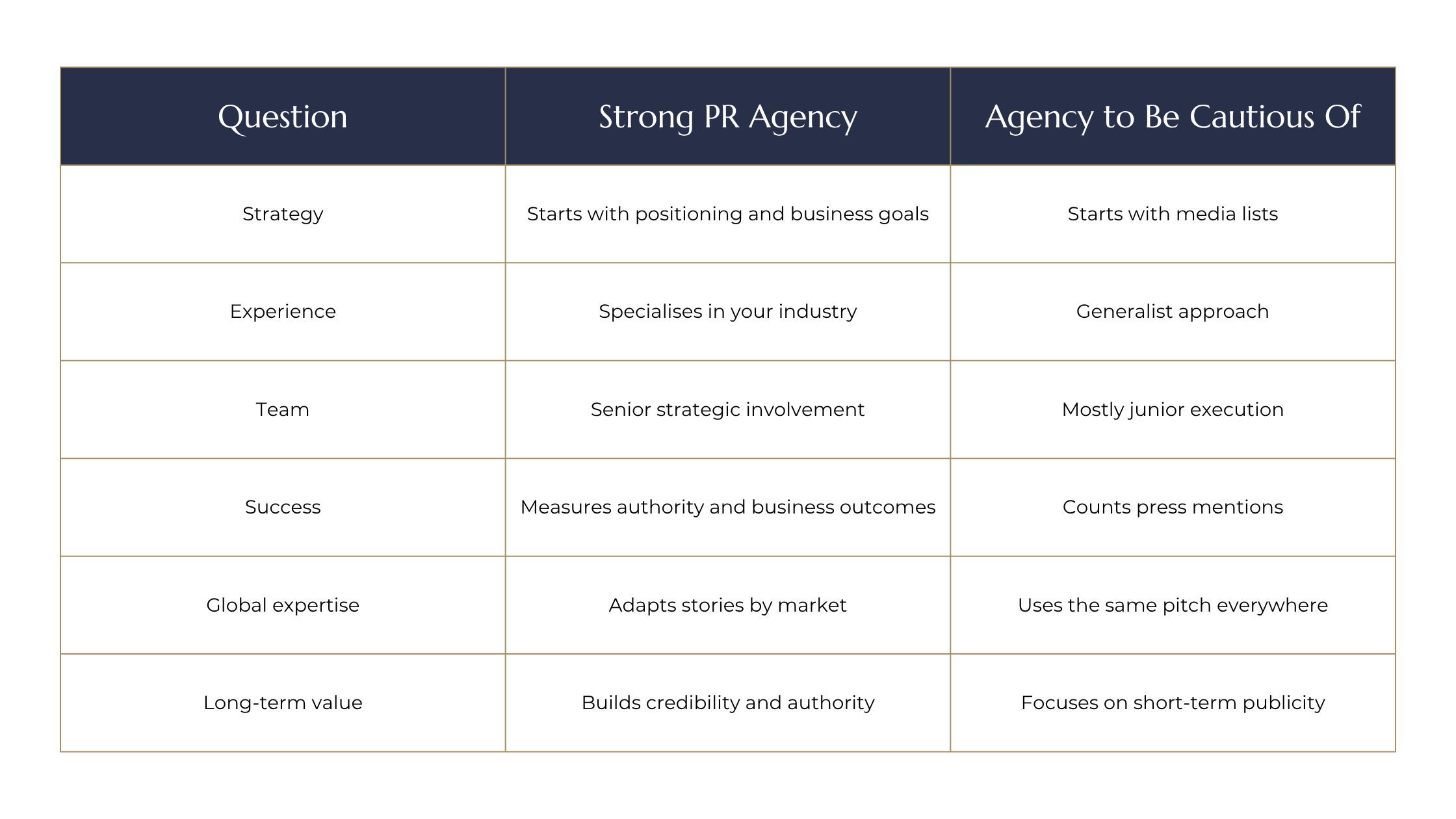
Comparison: What Does a Strong PR Agency Look Like?
Common Mistakes When Choosing a PR Agency
Over the years, I've seen brands unintentionally make the selection process harder by focusing on the wrong criteria. The mistakes I see most often:
Choosing an agency solely because they've worked with well-known brands
Comparing agencies only on price
Expecting guaranteed media coverage
Not asking who will actually manage the account
Prioritising volume of coverage over quality
Looking for publicity instead of long-term authority
Choosing an agency without travel industry expertise
Avoiding these mistakes often leads to a stronger, longer-term partnership.
Frequently Asked Questions
How much does a travel PR agency cost? Pricing varies depending on the scope of work, markets, campaign complexity, and level of senior involvement. Rather than comparing agencies on cost alone, I'd encourage you to consider the long-term value, strategic expertise, and business outcomes they can deliver.
How long does PR take to work? PR is a long-term investment. While some campaigns generate quick media coverage, building authority, trusted journalist relationships, and lasting visibility usually takes several months of consistent effort. In my experience, momentum tends to build meaningfully after around six months.
Is PR better than advertising? PR and advertising serve different purposes. Advertising creates immediate attention, while PR builds credibility. The strongest travel brands often invest in both, using paid media for reach and earned media for long-term authority.
Can PR improve SEO? It can, and significantly. High-quality earned media often generates authoritative backlinks, strengthens topical relevance, and increases brand visibility in search results. Consistent media coverage also contributes to the trust signals that influence AI-powered search experiences.
Should small travel brands hire a PR agency? Absolutely, if they have a clear story and realistic expectations. A strategic PR agency can help emerging travel brands establish credibility, differentiate themselves, and build authority long before they become household names. Some of the most rewarding work we do is with founders at exactly this stage.
Final Thoughts
Choosing a PR agency isn't about finding someone who can send media pitches. It's about choosing a strategic partner who understands your industry, challenges your thinking, and helps your brand build long-term authority.
The strongest travel, adventure, and wellness brands don't become recognised because they ran one successful campaign. They become recognised because they consistently invested in credibility, strategic storytelling, and meaningful media relationships. As search, media, and AI continue to evolve, those qualities will only become more valuable.
I started this agency because I believe travel has the power to change how people see the world, and I wanted more people to hear the stories of the brands making that happen. If that's the kind of partner you're looking for, I'd love to talk. Book a Discovery Call
Read More
Continue exploring:
Why Credible Media Coverage Is Becoming an AI Visibility Signal
The Travel Brands Journalists Return to Usually Have One Thing in Common
By Erin Carey
Erin Carey is the Founder and Director of Roam Generation, a boutique PR agency specialising in travel, adventure and lifestyle brands. She works with experiential companies across the US, UK and Australia to build authority through strategic earned media and thought leadership.
Roam Generation’s clients have been featured in publications including Travel + Leisure, Condé Nast Traveler, Forbes and National Geographic. In an era increasingly shaped by AI-driven search, Erin focuses on ensuring brands are not only visible, but trusted and cited where modern discovery happens.